

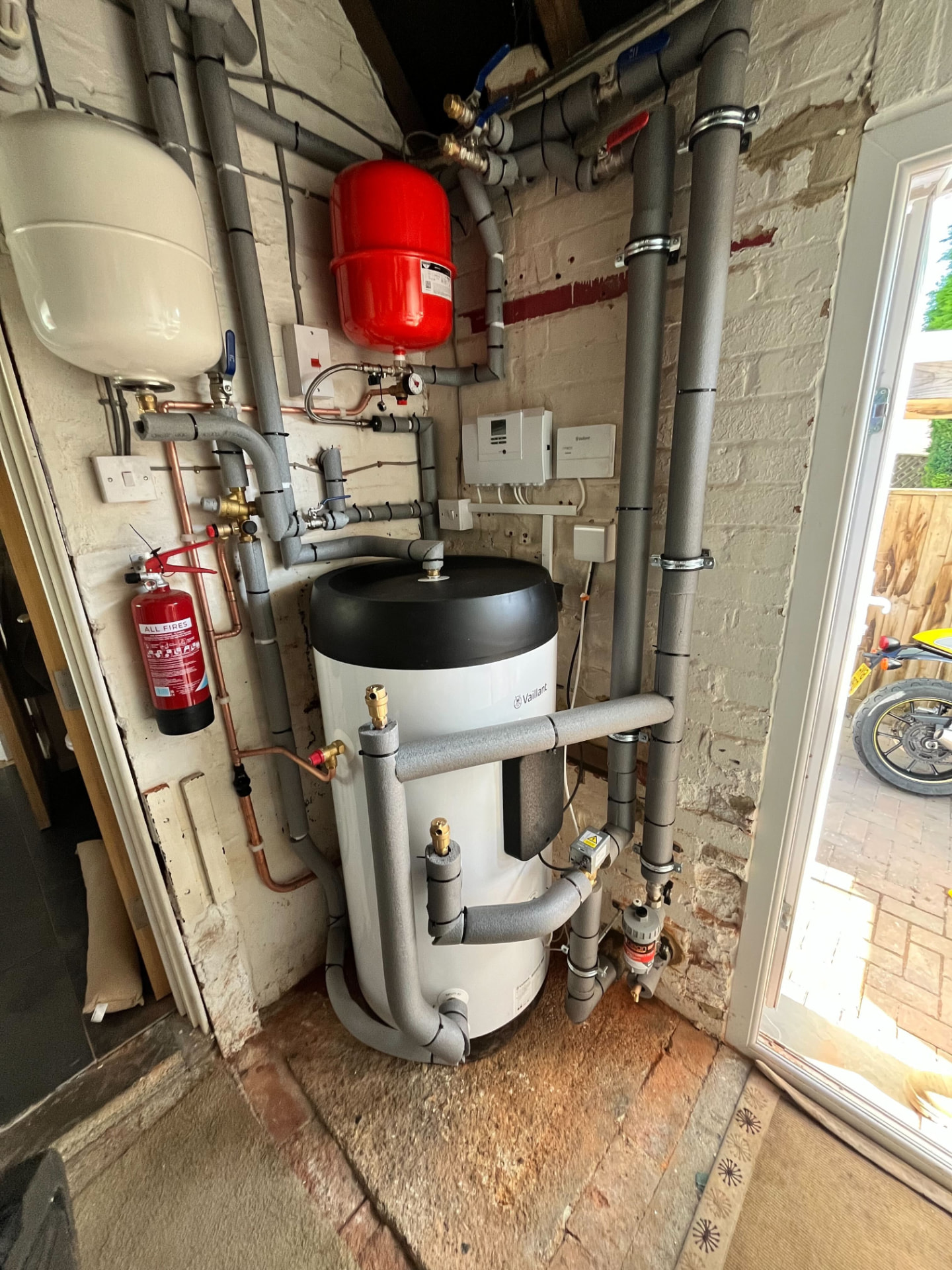
10 April 2025
Open-vented hot water cylinders remain a staple in the UK, used in thousands of homes for decades. But how do they work, when should you replace them and what are their pros (and cons) in a world of high expectations?
The basics: what is an open-vented cylinder?
Open-vented cylinders work with gravity-fed heating systems. A cold water tank in the loft supplies water to the cylinder via gravity, which is then heated and taps are fed from the top. The design is simple and reliable - installation is straightforward, maintenance costs are low and repairs are simple.
Advantages
- Excellent reliability - fewer parts to go wrong.
- Compatible with older plumbing layouts.
- Lower up-front costs; easier for renovations of period properties.
- Straightforward replacement procedure.
Key limitations and risks
- Water pressure depends on gravity - loft tank height determines shower and tap flow.
- More risk of contamination, since the tank is open to the air.
- Older units may lack insulation, resulting in heat loss and wasted energy.
- Takes up attic and airing cupboard space.
- Not as energy efficient as modern unvented or combi systems.
Regulations and best practice
Upgrading? Modern units must comply with Part L (energy conservation) and Part G (sanitation and temperature control), including extra insulation and scald-protection.
Our engineers assess the current cylinder, your requirements and recommend whether an open-vented or alternative system best suits your home.
Customer care - the Premier difference
We pride ourselves on honest assessment, tidy installations and ongoing support. Our engineers respect older properties and deliver work that is sympathetic to both history and efficiency.